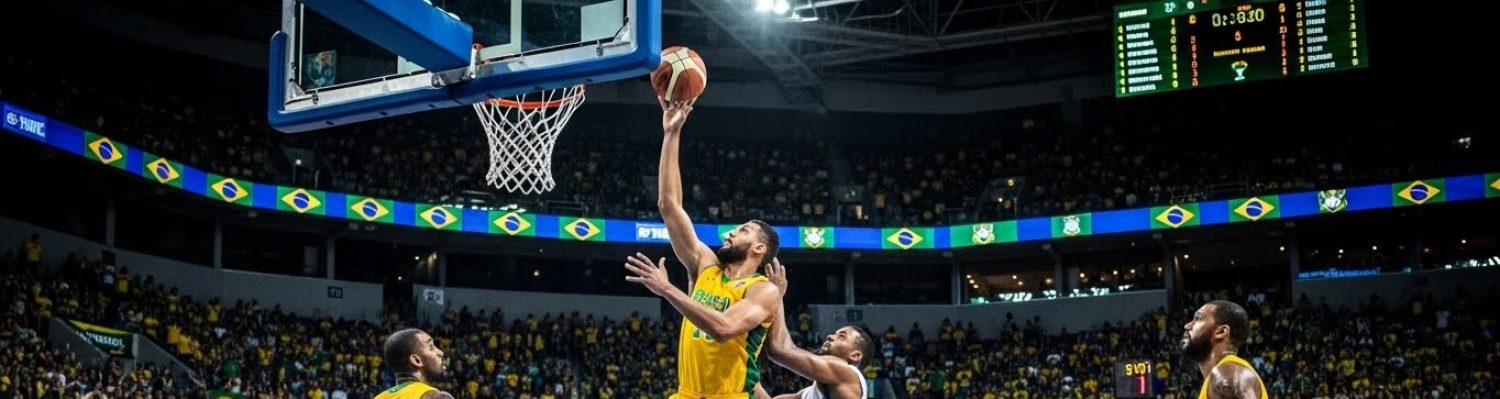
Americas Basketball Brazil: Brazil’s Qualifiers and Strategy
Updated: April 9, 2026
americas Basketball Brazil is reaching a pivotal moment as qualification windows tighten, demanding not just wins but a cohesive blueprint that matches the pace of the Americas region and the evolving style of the game in Brazil.
Context: The Americas Basketball Brazil landscape
Brazil sits in a crowded continental field where each qualification window tests development programs, coaching continuity, and player availability. The mix of veteran leadership and emerging talents has become the narrative of the current cycle, with national team staff balancing short-term results against long-term gains. In this environment, outcomes hinge less on a single star and more on the depth of the roster, the versatility of positions, and the ability to execute a disciplined game plan over four quarters. The ongoing exchange of talent between Brazil’s domestic league and overseas stops has sharpened the team’s pace, decision-making, and physicality, pushing the program toward a more professional standard. Recent coverage noted the impact of players like Leo Meindl as part of a broader wave of players bridging domestic development with international exposure, illustrating the evolving identity of americas Basketball Brazil.
From talent to system: building a sustainable pipeline
The national program now faces the challenge of translating individual skill into a scalable system. That means establishing consistent coaching philosophies, a unified playbook, and a talent network that spans the country. Scouting networks, youth academies, and a clear progression path from junior teams to the national squad matter as much as the size of the roster. In practice, this translates to structured pre-season camps, data-driven player evaluation, and a rotation plan that leverages Brazil’s length on the wings and interior presence without overburdening veterans. The narrative around Leo Meindl’s development — from standout domestic performances to exposure on international stages — signals how Brazil can cultivate multi-positional guards who can adapt to different styles of play. The key question is whether the system rotates players effectively, preserves energy across windows, and maintains defensive intensity when rotations shorten or change due to injuries and fatigue.
Strategic bets and scenario framing
Looking ahead, Brazil’s path will be shaped by a few core bets: guard depth and playmaking versatility, interior rim protection, and three-point shooting under pressure. If the team can secure a stable backcourt rotation and maximize pace without compromising rebounding, it increases the odds of competing with a wide range of opponents in the Americas. Scenario-wise, three plausible trajectories emerge. First, qualified continuity: a stable lineup that grows together for the next window, producing incremental gains and sharper execution. Second, personnel tinkering: short-term experimentation with emerging talents to identify mid-term fits ahead of the next cycle. Third, external shocks: injuries or scheduling suboptimizations forcing rapid adjustments, testing strategic resilience. In each pathway, the underlying driver remains a robust development pipeline that translates practice into confident in-game decision-making, particularly on defense and transition offense.
Actionable Takeaways
- Invest in nationwide youth scouting and coaching education to create a steady supply of versatile players.
- Align the domestic league calendar with international cycles to optimize player availability and readiness for windows.
- Prioritize guard development, decision-making, and shooting to complement Brazil’s length and versatility on the perimeter.
- Strengthen sports science, conditioning, and recovery programs to sustain performance across multiple qualifiers.
- Build formal partnerships with other Americas programs to share best practices in scouting, coaching, and player development.
Source Context
From an editorial perspective, separate confirmed facts from early speculation and revisit assumptions as new verified information appears.
Track official statements, compare independent outlets, and focus on what is confirmed versus what remains under investigation.
For practical decisions, evaluate near-term risk, likely scenarios, and timing before reacting to fast-moving headlines.
Use source quality checks: publication reputation, named attribution, publication time, and consistency across multiple reports.
Cross-check key numbers, proper names, and dates before drawing conclusions; early reporting can shift as agencies, teams, or companies release fuller context.
When claims rely on anonymous sourcing, treat them as provisional signals and wait for corroboration from official records or multiple independent outlets.