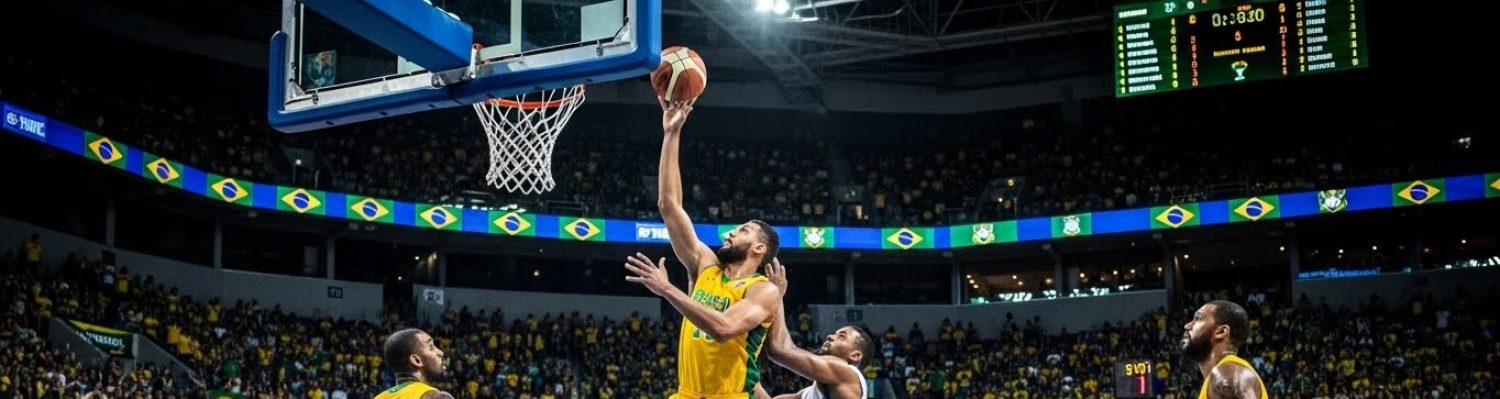

World Basketball Brazil: Analyzing Brazil’s Global Rise
Updated: April 9, 2026
Brazil sits at a crossroads in world Basketball Brazil—an era in which the sport’s global economy, talent pipelines, and competitive calendars increasingly converge on Rio, São Paulo, and the arenas where the NBB plays. This analysis looks beyond splashy headlines to map how Brazil’s program, clubs, and emerging players prepare for a world that rewards both depth and mobility. The central question is practical: can Brazil translate domestic growth into sustained on-court impact at the Olympics and in global competition, or will the country remain a feeder system without a consistent top-tier presence?
Brazil’s program in a shifting global landscape
Over the last decade, Brazil has rebuilt a pipeline that stretches from youth academies to the professional stage. The confederation has prioritized local coaching education, standardizing youth competition, and pushing a modest but growing number of players toward North American opportunities. Yet the path from development to elite international success remains crowded. Brazil faces the challenge of aligning club schedules, national-team camps, and overseas scouting cycles so that talent can mature with consistent competition. The practical effect is that the national team often arrives at major tournaments with a mix of seasoned veterans and rising prospects who have learned to navigate different basketball cultures, languages, and styles. The result is a program that is capable of competing in bursts—but the schedule and depth of bench talent still determine whether Brazil can sustain that success across a multi-summer cycle.
Global dynamics reshaping opportunities for Brazil
In modern basketball, the global calendar shapes which players develop, where they play, and how teams approach competition. For Brazil, the expanding reach of scouting networks, the growth of European leagues, and the NBA’s increasing interest in non-traditional markets create both openings and pressure. The country’s best prospects can accelerate their development through NCAA scholarships or professional stints abroad, while national-team planning benefits when players return with sharpened competitive instincts and new tactical vocabularies. At the same time, Brazil must navigate a crowded international landscape where a few nations dominate the top tier and others press for incremental breakthroughs. The practical question is how Brazil can convert episodic performances into a reliable competitive spine—coaches drafting a coherent defensive philosophy, data-informed conditioning, and a culture of playing multiple styles to counter varied opponents.
From domestic leagues to international stages: a pipeline analysis
The domestic league, the NBB, remains the most visible engine for Brazil’s basketball economy. Its growth hinges on sponsorships, broadcast reach, youth integration, and federation-backed coaching development. A more robust pipeline would see better alignment with national-team needs, including shared training blocks, injury prevention programs, and a data-driven approach to talent identification. When players matriculate from Brazilian academies into international circuits, they bring exposure to different pacing, shot selection, and decision-making tempos, which can elevate the national team’s approach. The challenge is ensuring that the domestic league can retain top talent while still feeding the national program with players who have both the physical tools and the tactical literacy demanded by top-tier opponents. In short, a stronger, more integrated pipeline could translate talent into on-court performance during crucial windows like continental championships and Olympic cycles.
Scenarios for the 2026 cycle and beyond
Scenario one envisions Brazil building a robust, export-ready pipeline: more players in NCAA or overseas leagues, systematic data analytics adoption, and a longer-term coaching pipeline that stabilizes the national-team system across cycles. If that happens, Brazil could push into the upper-middle tier of world basketball, challenge for quarterfinal spots in global events, and develop a recognizable identity on both ends of the floor. Scenario two, by contrast, imagines persistent bottlenecks—funding gaps, scheduling pressures, and brain drain to other sports or professions—leading to years of mid-table finishes and limited impact on the global stage. A third possibility is an incremental middle path: modest improvements in domestic competition, occasional breakthroughs by a handful of players abroad, and occasional natural breakthroughs in regional tournaments. The practical takeaway is that outcomes hinge on deliberate, sustained investment rather than episodic success, and that timing matters—as a generation ages, opportunities must be converted into on-court results within tight windows.
Actionable Takeaways
- Prioritize long-term development pipelines: fund coaching education, youth leagues, and benchmarking that aligns with national-team needs.
- Forge structured export pathways: partnerships with NCAA programs and foreign clubs to ensure Brazilian players gain quality experience and return with improved tactical literacy.
- Integrate the domestic league with the national program: synchronized training blocks, injury prevention, and analytics sharing to elevate performance across levels.
- Invest in sports science and data analytics: build in-house capabilities to evaluate players, inform selection, and tailor conditioning for multi-competition cycles.
Source Context
Contextual sources that frame Brazil’s global basketball trajectory and related sports dynamics: