
The Influence Of Analytics In Nba How Big Data Is Changing The Game
Updated: April 9, 2026
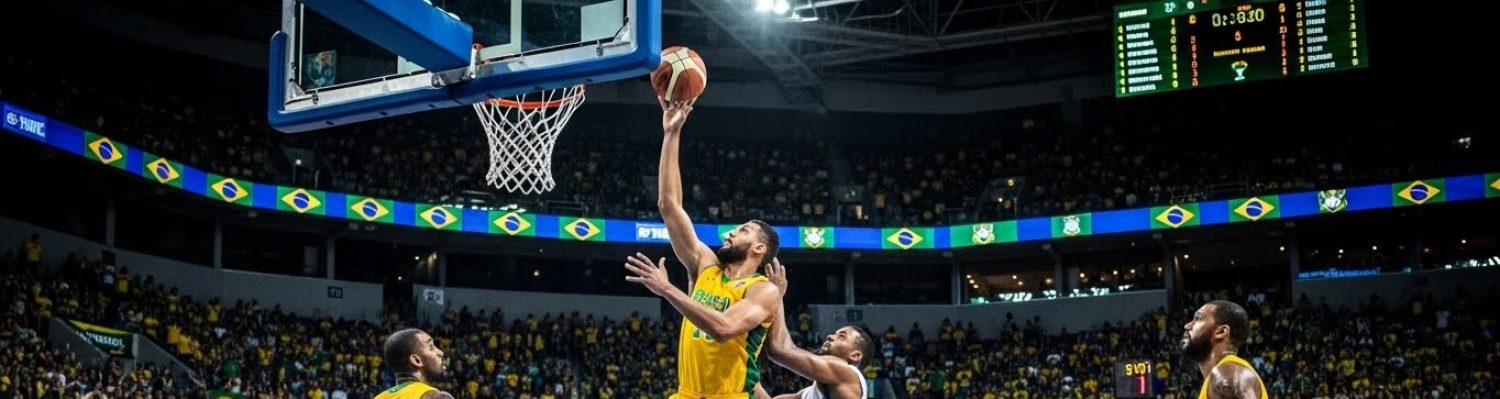
americas Basketball Brazil is at a turning point as the nation’s clubs and national program recalibrate after a decade of uneven results. This analysis situates Brazil within the wider Americas basket of competition, tracing how youth development, professional leagues, and international exposure interact to shape a plausible path toward sustained relevance.
Global context
In the global hierarchy, the Americas region has long centered on the United States, but Brazil’s trajectory matters because it tests the balance between natural talent and systemic development. The Americas Qualifiers for world events often expose where Brazil excels—athleticism, pace, and improvisation—and where improvements are needed—structure in defense, game-to-game consistency, and bench depth. The best path forward requires aligning federation goals with club development, so players can progress from youth courts to professional leagues and onto the national stage with fewer disruptions.
Brazil’s strategy and the youth pipeline
Brazil’s basketball leadership has repeatedly stressed a bottom-to-top approach: invest in coaching education, create transparent pathways from youth programs to the NBB, and cultivate partnerships with European clubs that offer exposure without draining the domestic league’s competitiveness. The result is a pipeline where a promising teenager can train with top-level teams, participate in national youth championships, and later join an NBB team or seek opportunities abroad while retaining a link to the national program.
Rising players, such as Leo Meindl during recent qualifiers, illustrate the potential of this model when backed by structured development and coaching continuity. When young guards are exposed to diverse styles—European spacing, North American pace, and South American tactical discipline—they learn to read defenses more quickly and make decisions under pressure. The challenge is ensuring those players return to Brazil with a refined skill set for the national team, not simply chase a contract in Europe.
Competitive landscape and case studies
On the floor, Brazil faces a more crowded regional field than a decade ago. Argentina, Canada, and the Caribbean programs—plus clubs from Chile and Uruguay—compound the difficulty of securing consistent results in international windows. Yet there are case studies within Brazil itself: clubs that have built defense-first cultures, data-informed player development, and international scouting networks that identify late bloomers who can contribute in qualifiers and mid-season competitions.
The domestic league, the Novo Basquete Brasil (NBB), is central to translating talent to international readiness. When a Brazilian player earns minutes against regional rivals and in international-friendly tournaments, that experience compounds. The best outcomes emerge when the domestic league acts as a high-intensity lab, with a calendar that allows players to rest, recover, and study game film, all while maintaining competitive balance across teams.
Data-driven insights and scenario framing
From a policy perspective, progress is best measured by a handful of indicators: the share of players who spend at least two seasons in competitive leagues abroad, the volume of minutes allocated to development-first lineups in the NBB, and the degree of integration between youth academies and the senior national team program. Three scenarios illustrate possible futures.
Baseline: steady incremental improvement as coaching standards and league investment climb gradually. Optimistic: a coordinated push—federation funding, private partnerships, and export pipelines—produces a generation with higher international exposure, improving wins in qualifiers and the ability to sustain a longer run in regional tournaments. Pessimistic: budget constraints, weak talent retention, and misaligned club-national program priorities erode competitive depth, leaving Brazil reliant on a handful of standout players rather than a broad base of match-ready options.
Actionable Takeaways
- Invest in grassroots coaching education and certification programs to raise the overall quality at the source.
- Build a standardized youth-to-professional pipeline that aligns club development with national-team needs and uses analytics to guide player progression.
- Strengthen the domestic league’s structure to ensure sustainable development, rest periods, and meaningful cross-competition that mirrors international play.
- Foster data-sharing partnerships with European clubs to identify and develop talent while ensuring player welfare and education are protected.
- Emphasize tactical versatility, focusing on the guard position’s development to realize the americas Basketball Brazil potential in international games.