Americas Basketball Brazil: Growth, Qualifiers, and Strategy
Updated: April 9, 2026
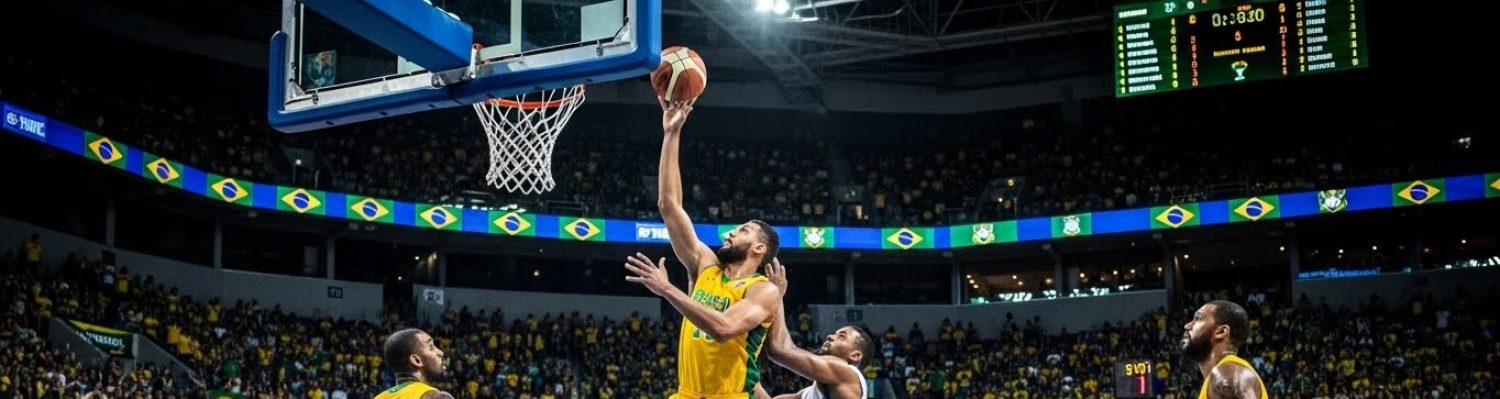
Across the americas Basketball Brazil landscape, the national team stands at a crossroads between domestic development and continental tests. The coming qualifiers demand not only short-term wins but a sustainable model for nurturing youth, aligning club and federation interests, and translating talent into on-court results. In this moment, Brazil’s program is measured as much by its pipeline and preparation as by its latest box-score lines. For fans and analysts in Brazil, the question is not only who plays now, but how the country leverages its basketball ecosystem to compete consistently with the region’s top programs and to position itself for longer-range opportunities in the Americas.
Context and Stakes for Brazil in the Americas
The Brazilian national team enters a cycle where the balance between development and results matters more than ever. In the Americas, Brazil faces a dense field of capable teams with varying strengths and travel demands that test rosters and preparation time. The federation’s challenge is twofold: ensure the continuity of a core group capable of executing a shared system, and widen the talent pool to reduce risk if a key player is unavailable. That dynamic is particularly acute in the lead-up to global events, where a few wins can shift seeding and access to more favorable qualifying windows. Brazil’s performance in the Americas context will influence not just a single tournament, but its broader credibility as a program that can sustain growth while remaining competitive with established powers in the region.
Recent reporting and on-court indicators point to a growing awareness of how to bridge domestic development with international competition. The national program is increasingly viewed as a long-term project, where what happens in the NBB and regional academies informs decisions on call-ups, camp durations, and tactical flexibility. That approach has consequences: it compels a disciplined calendar, better data collection on players, and clearer player pathways from youth levels to senior duty. The payoff is not merely right-now results, but a credible trajectory that makes Brazil a viable regional partner in the Americas for years to come.
Talent Pipeline and Roster Building
Brazil’s talent pipeline is expanding in both depth and breadth. Clubs in the Novo Basquete Brasil (NBB) are increasingly functioning as more than showcase leagues; they are development engines that feed the national program with players who understand the federation’s system and can adapt to different competition styles. The emergence of versatile wings and guards who can play with pace or tighten the defense provides a strategic advantage when the team faces multiple opponents across the continent. A recent spotlight on rising contributors in qualifiers underscores the importance of guard play, shooting uncertainty, and the ability to read international schemes quickly. In this context, development tracks—regional camps, targeted player evaluations, and exchange programs with European leagues—have become a core part of Brazil’s long-term planning.
The Leo Meindl case, highlighted in regional coverage, illustrates a broader trend: a player who can impact games through decision-making and shot-making under diverse pressure, helping to anchor the backcourt while the team scales its collective defense. The path from youth systems to senior levels is no longer a linear climb; it’s a staggered ladder that rewards multiple skill sets and the willingness of clubs to give players meaningful minutes in high-stakes contexts. As such, roster building now emphasizes versatility, adaptability to multiple lineups, and a clear plan for how to sustain performance across back-to-back qualifiers and friendlies.
Tactical Trends and Coaching Influence
On-court execution reflects a pragmatic approach to the realities of international competition. Brazil’s coaches are increasingly emphasizing spacing, ball movement, and a flexible defensive framework that can absorb mismatches without surrendering transition opportunities. The tactical emphasis complements the evolving talent pool: players who can shoot from the corners, attack closeouts, and switch effectively in pick-and-roll coverages offer more options for game plans against varied opponents.
This design philosophy is not just about systems; it’s about coaching development itself. The federation’s investment in coaching education, scouting networks, and international exchange programs aims to raise the baseline across the entire talent ecosystem. When a country can raise the floor of its coaching, marginal gains from players translate into consistent performance across a demanding schedule. The result is a team that can compete with multiple regional archetypes—ball-dominant teams, defense-first squads, and high-pace offenses—without losing its identity in the process.
Paths to Qualification and Scheduling Realities
Qualifying cycles in the Americas demand careful calendar management and realistic assessments of travel, rest, and recovery. For Brazil, the strategic question is not only which games to target but how to maintain cohesion as players move between clubs and national-team camps. Scheduling realities—windows during the domestic season, international friendlies, and travel across large geographies—create potential gaps in continuity. A pragmatic approach requires modular training blocks, focused scouting, and a clear plan for integrating newcomers without destabilizing core rotations. Investors in the program gauge success by more than wins: they look for sustainable, repeatable processes that can sustain switch-heavy lineups and keep the team competitive across multiple tournaments within a single cycle.
International exposure also matters for domestic league growth. When Brazilian players thrive against varied competition, it raises the league’s profile, attracting sponsorship, improving broadcast value, and feeding more robust talent pipelines back into the national team. The practical outcome is a virtuous cycle: more competitive games abroad sharpen players, which strengthens the NBB, which in turn bolsters the national program’s readiness for the next set of qualifiers.
Actionable Takeaways
- Strengthen the NBB’s role as a development engine by formalizing a national-team pipeline with defined minutes and caps for emerging players in each season.
- Expand cross-border development: create structured exchanges with European leagues and robust scouting to accelerate the integration of Brazilian players into different tactical vocabularies.
- Invest in data-driven player development: implement standardized performance metrics, in-game decision tracking, and feedback loops between club and national-team staffs to shorten adaptation times.
- Enhance youth pathways: partner with academies and schools to identify talent early and provide certified training curricula aligned with international standards.
- Build a flexible coaching cadre: support tactical experimentation at the youth and senior levels, enabling rapid reconfiguration of lineups in response to opponents without sacrificing identity.