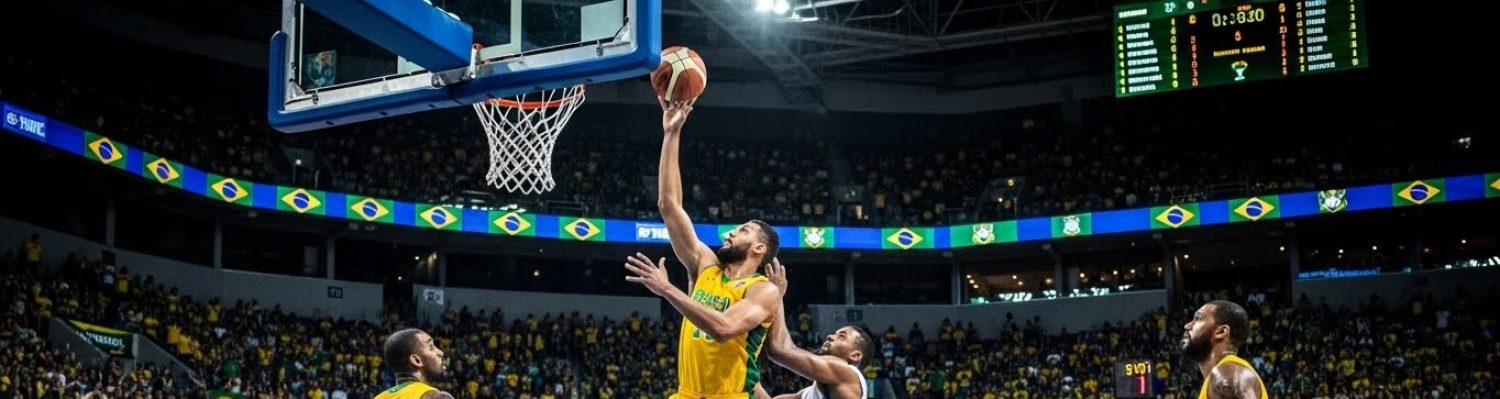
Brazilian basketball court at sunset with players warming up
Updated: April 9, 2026
In brazil’s Basketball Brazil, the sport sits at a crossroads between rising talent pipelines and a fragmented professional landscape that limits national impact beyond the court. The question isn’t only how Brazilian players perform in domestic rings, but how a broader ecosystem—coaches, facilities, broadcasters, and youth programs—aligns to translate talent into sustained international competitiveness.
The state of development and infrastructure
Brazilian basketball has grown in pockets of the country where cities invest in training centers, gymnasiums, and coaching education. Yet the pattern is uneven: some urban areas cultivate robust coaching pipelines and data-driven training, while rural and smaller markets struggle with access to quality facilities. A national plan to standardize coaching curricula and align youth competitions with international calendars could help reduce talent leakage, but it requires long-term commitment, stable funding, and cross-sector coordination among clubs, schools, and municipal authorities. The risk, if the system fails to scale, is a persistent festival of exceptions rather than a cohesive, nationwide pipeline that consistently feeds the senior national team.
Youth pipelines and the domestic league
At the domestic level, the Novo Basquete Brasil (NBB) and its feeder leagues provide a framework for talent development, but sponsorship volatility and travel costs can dampen momentum. Youth academies connected to schools, plus regional development programs, are essential for broadening access to high-level coaching and competition. The key question is whether Brazil can translate a handful of export-ready players into a steady stream of professionals who contribute back to domestic clubs and to the national program. Strengthening ties between clubs, national youth teams, and international camps could create a more resilient pipeline that keeps players engaged locally while pursuing opportunities abroad when appropriate.
Economic pressures and governance
Private sponsorship remains a major driver but is inherently cyclical, tied to broader market conditions and currency dynamics. Broadcast revenue and sponsorships for basketball typically lag behind football in Brazil, constraining investments in training facilities, scouting networks, and data analytics. Good governance—transparent funding streams, merit-based talent allocation, and long-range strategic planning—becomes a competitive advantage, signaling to sponsors that investments will yield measurable outcomes. In this environment, local and state governments can play a pivotal role by funding safe, modern facilities and by creating incentives for clubs to invest in youth development, coaching education, and long-term planning rather than short-term success.
Strategic scenarios for Brazil’s basketball future
Looking ahead, Brazil could follow a few plausible paths anchored in governance quality and cross-border partnerships. An optimistic trajectory would involve a coordinated consortium of clubs, universities, broadcasters, and sponsors funding systemic youth development, coaching education, and scouting networks. If successful, this could lift the domestic league’s quality while expanding the pool of players who reach elite European leagues or the NBA system, without draining domestic competition. A more conservative route prioritizes stability—incremental facility upgrades, standardized coaching, and improved youth participation—while a third, riskier scenario risks talent fragmentation and a talent drain that keeps the domestic league dependent on a few star players rather than a broad ecosystem.
Actionable Takeaways
- Federations and clubs should publish a 10-year development plan with clear coaching education milestones and performance metrics.
- Municipal and state governments should earmark dedicated facilities funds tied to youth participation growth and safe infrastructure.
- Broadcast partners and sponsors should align with a national youth league calendar to maximize exposure and revenue sharing with clubs.
- Universities and academies should formalize pathways to professional leagues abroad while preserving opportunities for domestic competition.
Source Context
Actionable Takeaways
- Track official updates and trusted local reporting.
- Compare at least two independent sources before sharing claims.
- Review short-term risk, opportunity, and timing before acting.
From an editorial perspective, separate confirmed facts from early speculation and revisit assumptions as new verified information appears.
Track official statements, compare independent outlets, and focus on what is confirmed versus what remains under investigation.
For practical decisions, evaluate near-term risk, likely scenarios, and timing before reacting to fast-moving headlines.
Use source quality checks: publication reputation, named attribution, publication time, and consistency across multiple reports.