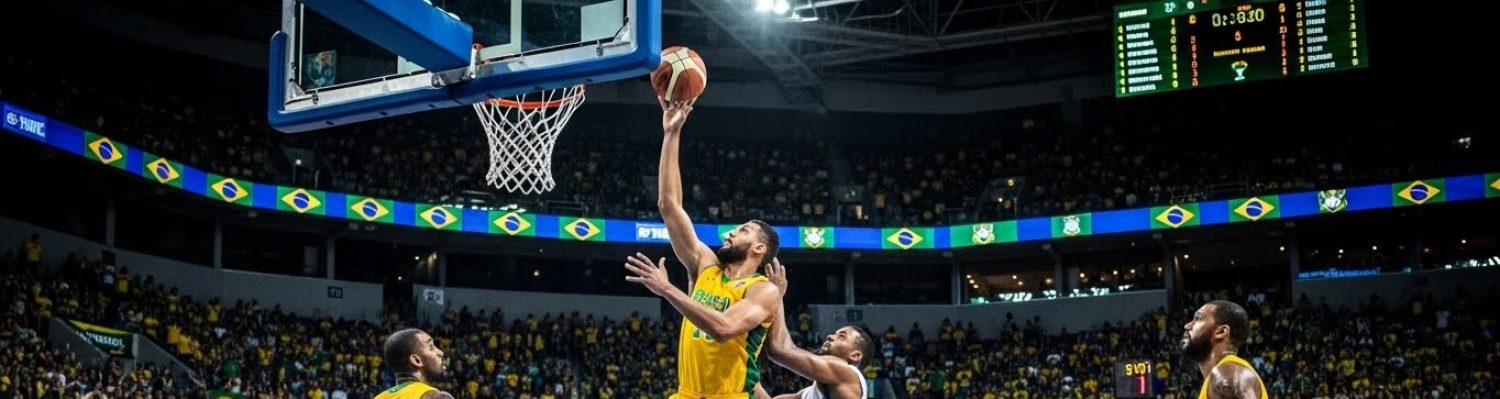

athletics Basketball Brazil: Brazil Basketball: Deep Analysis of Ath
Updated: April 9, 2026
Across Brazil, passion for basketball has never matched football, but the sport is evolving. This analysis treats athletics Basketball Brazil as a lens to understand how competitive balance, youth development, and domestic league structures could shape the country’s long-term performance. Rather than chasing a single breakout star, the focus is on systemic patterns that determine accessibility, scouting, and sustained success on the global stage.
Current Dynamics in Brazilian Basketball
The Brazilian basketball ecosystem revolves around the Novo Basquete Brasil (NBB) and a network of regional clubs that serve as talent hubs. While Brazil has a storied basketball history and has produced players who excel overseas, the domestic market remains modest compared with football-dominated industries. The core questions concern competitive balance across teams, talent distribution from the northeast to the south, and how national team cycles align with club calendars. Observers note that exposure to higher levels of competition, coupled with professional development staff and analytics, correlates with on-court gains. The challenge is not just star power but sustaining a pipeline where youth players can translate early promise into professional opportunities and national-team contribution.
Beyond on-court matters, governance, sponsorship structures, and media rights perform outsized roles. When leagues secure consistent broadcast windows and stable sponsorships, teams invest more in coaching, facilities, and player health. Conversely, irregular funding can hinder scouting networks, limit international exposure, and dampen fan engagement. The result is a cycle where improvements at the grassroots level require coordinated bets across schools, clubs, and municipal authorities. In short, Brazil’s current dynamics hinge on turning sporadic breakthroughs into durable system-wide gains.
Youth Development and Local Leagues
Youth academies, school leagues, and streetball culture intersect to create latent potential. Efforts to formalize talent pipelines through regional tournaments and club-based academies pay off when paired with standardized coaching curricula and accessible facilities. Yet Brazil’s geography—dense urban centers paired with remote interior areas—poses an access challenge. In this context, local leagues and youth programs act as engines of social mobility, provided they connect to professional pathways that reward progress with clear incentives. The strategic question is how to scale successful models from a few cities into a federated national approach.
Partnerships with schools and municipal governments can provide seasonal calendars, gym access, and safety protocols, enabling more consistent practice time. The best programs blend community engagement with a pathway to elite competition, aligning coaches’ development with national standards and data-informed scouting. The result is not a single star system but a broader base of players who can contribute to the national program and to clubs aspiring for long-term competitiveness.
Investment, Infrastructure, and Talent Drain
Infrastructure quality and financial stability shape where players stay in Brazil and where they move abroad. Thedomestic arena stock ranges from modern urban venues to aging facilities that constrain training quality and fan experience. Investment decisions—from sponsorship deals to youth facility upgrades—reflect macroeconomic conditions and political priorities. When investment is predictable, clubs pursue long-term development plans, analytics, and medical staff expansion. When it is not, player attrition to European leagues or college programs intensifies, diminishing domestic depth. Talent drain is real but not irreversible; it intensifies when clubs fail to offer compelling professional tracks, early contracts, or post-playing opportunities that keep players committed locally.
Policy levers at the federation level, prudent league budgeting, and innovative funding models (for example, public-private partnerships and youth scholarships) can slow leakage. Ensuring competitive salaries, affordable housing near academies, and incentives for returning veterans can help retain talent while building a culture of professional development that endures across cohorts.
Strategic Scenarios for Growth
Three plausible trajectories illustrate how Brazil might navigate its basketball future. In a constrained scenario, growth remains incremental: improvements in coaching, some facility upgrades, and moderate media exposure yield steady but slow gains in national-team performance. A second, status-quo scenario sees the federation expanding youth programs and improving league governance, leading to better talent retention and more competitive teams without a dramatic rise in global results. A third, optimistic scenario imagines a coordinated national push—combining public funding, private sponsorship, and regional development—that creates an enduring pipeline from junior programs to the national team, stronger club brands, and more companies willing to invest in basketball infrastructure. Critical in all cases is the alignment of calendars, athlete welfare, and data-driven scouting that identifies the right players at the right times.
To unlock the optimistic path, stakeholders should prioritize three levers: long-term investment commitments, transparent governance with anti-fragility against shocks, and a media strategy that broadens basketball’s appeal across Brazil’s diverse regions. Such an approach not only raises on-court performance but also strengthens basketball’s social and economic value in communities that need it most.
Actionable Takeaways
- Coordinate a national youth development framework that ties school programs to club academies with standardized coaching and evaluation metrics.
- Secure predictable funding for leagues and facilities through multi-year sponsorships and public-private partnerships to stabilize training environments.
- Improve talent retention by offering clear professional tracks, housing support near academies, and post-career opportunities within the sport.
- Enhance scouting and analytics integration at the club level to identify and fast-track promising players to higher levels of competition.
- Align the basketball calendar across federations, leagues, and international windows to maximize development time and minimize scheduling conflicts.