Brazil Basketball Brazil: Analyzing Brazil’s Rise in Global Hoops
Updated: April 9, 2026
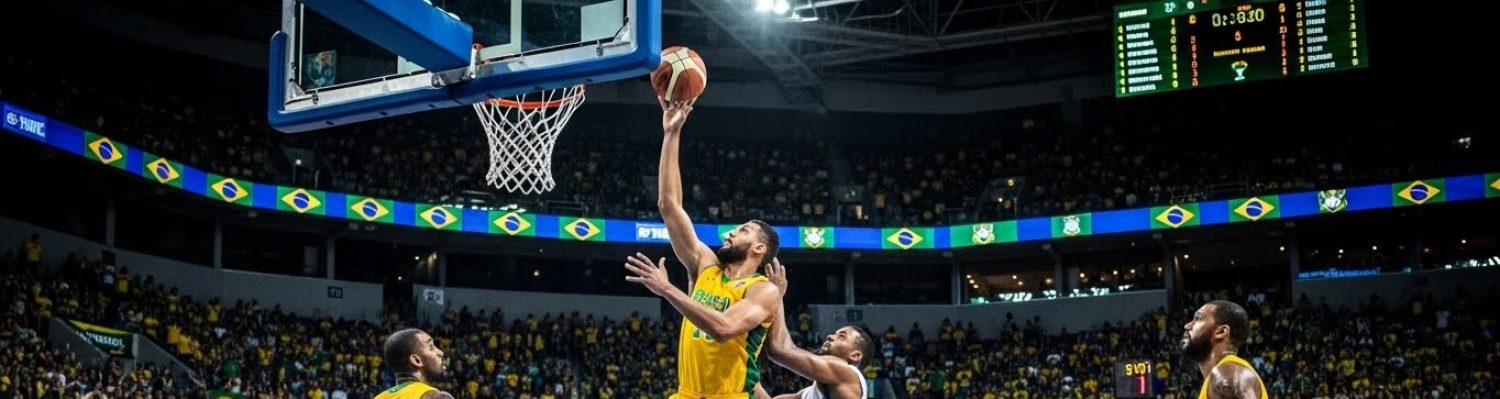
Brazil has long produced world-class football and world-famous samba, but basketball is quietly building a parallel arc. This analysis of brazil Basketball Brazil examines how domestic leagues, youth academies, and international exposure are reshaping the sport’s future in the country. Instead of focusing on a few marquee players, the piece considers the ecosystem: the strength of the Novo Basquete Brasil (NBB) clubs, the pathways from neighborhood courts to abroad, and the national team’s evolving strategy for sustained competitiveness. The questions are practical: can Brazil scale its infrastructure, keep home-grown talent within national borders long enough to mature, and leverage overseas experience to raise the domestic standard? Are sponsors and media partners aligning with a longer horizon, or is progress still contingent on a few breakthrough performances? By framing these dynamics as interlocking levers rather than isolated headlines, this article outlines plausible scenarios for how Brazil’s basketball map could shift over the next five to ten years.
Domestic Foundations: NBB and Youth Development
The domestic landscape for Brazilian basketball rests on a cluster of clubs that compete in the Novo Basquete Brasil (NBB) and on a growing network of youth academies. The NBB has become more than a league; it is a talent incubator that periodically turns neighborhood players into professional contributors. Clubs are increasingly integrating scouting programs, data-informed player development, and partnerships with schools to sustain a pipeline beyond a single star turn. The emphasis is gradual improvement: coaches who prioritize fundamentals, strength and conditioning, and on-court decision-making rather than quick fixes. While the level of play in the NBB still frames emulation for younger players, the trend is toward professionalization at every tier, with club academies offering structured pathways from youth leagues to the professional flow. This heightened emphasis on development over spectacle matters because it creates a longer horizon for Brazilian players, potentially reducing talent drain and expanding the pool of players who can compete abroad without sacrificing domestic growth.
Talent identification in Brazil now benefits from a more organized calendar and regional tournaments that expose players to different styles. When a young player from a coastal city shares a bill with a rival from the interior, coaches observe how versatility translates across positions and pace, a feature that broadens the tactical vocabulary available to the next generation. The result is a more resilient generation that can adapt during higher-stakes games in Europe or the Americas. In practical terms, the domestic structure must continue investing in coaching education, facilities, and cross-border exchanges to ensure the NBB remains both aspirational and reachable for young Brazilians.
Talent Pathways: The European Pipeline and Skill Specialization
One of the most consequential shifts in Brazil’s basketball ecology is the increasing flow of players to European leagues where tactical sophistication and competition depth accelerate skill refinement. Players who move to Spain, Italy, Portugal, or other European markets gain exposure to professional systems, advanced analytics, and year-round competition, which in turn raises their value back home and across the continent. This isn’t merely a transfer of talent; it is the transfer of practice culture. Brazilian players returning from Europe bring refined shooting mechanics, spacing understandings, and defensive principles that can be synthesized into Brazilian team concepts. The risk, of course, is a talent drain at the very moment Brazil must balance international experience with domestic readiness. The practical answer lies in structured agreements with European clubs and a domestic development plan that keeps critical developmental years aligned with the national team’s needs. When players mature in Europe while maintaining ties to Brazilian coaches and clubs, Brazil benefits from a hybrid model that accelerates the learning curve without hollowing out the domestic league.
Coaching ecosystems in Brazil are gradually adopting European training rhythms, film study, and player tracking. This alignment helps to create a more coherent skill-set across age groups, reducing the gap between junior levels and the professional stage. For Brazilian players, it also means clearer expectations about positions, role specialization, and longevity. The strategic objective is not to hoard talent but to cultivate a supply chain that feeds both the national team and the NBB with players who can contribute at multiple levels, from bench units to clutch moments in tight games. The European pipeline, therefore, should be viewed as a symbiotic channel that elevates the entire Brazilian basketball ecosystem rather than a one-way exit ramp for young players.
Global Exposure and the National Team’s Outlook
Gaining consistent global exposure has become a cornerstone of Brazil’s long-term strategy. International tournaments, qualifying campaigns, and friendly windows against top-tier teams serve as real-world testing grounds for new concepts. For the national team, success hinges on balancing talent from the NBB with the experience players gain abroad, ensuring that tactical innovations are not squandered when competition intensifies. The national program also benefits from data-driven scouting and better synergy between coaches at different levels, enabling faster adaptation to evolving international styles. While Brazil’s romp to the podium is not guaranteed, a deliberate plan that pairs domestic growth with international exposure offers a credible path toward more regular competitive finishes in major events. The incremental gains—improved shot selection, defensive rotations, and faster transition play—can accumulate into meaningful improvements over a multi-year cycle.
From a policy perspective, keeping a core of players connected to Brazilian basketball while they explore overseas opportunities is critical. When players return with refined skill sets and leadership experience, Brazilian teams gain a higher floor for performance. The national program should also emphasize inclusivity and development across regions to avoid talent clustering in a few urban centers. If Brazil can maintain broad-based participation while raising the bar for elite players, the resulting competitive spine will better withstand the volatility of global rosters.
Strategic Outlook: Infrastructure, Coaching, and Investment
Long-term progress in brazil Basketball Brazil depends on improved infrastructure and a more stable funding environment. This includes modern training facilities, better youth competition governance, and sustained investments in coaching education. A practical plan prioritizes coach licensing, mentorship programs, and regular exchange trips with established basketball nations. Public-private partnerships can anchor facilities that serve not only professional teams but also community clubs, schools, and clinics. Additionally, analytics capacity—from game footage to performance metrics—gives teams a sharper sense of what works and where to allocate scarce resources. The strategic outlook requires patience and a willingness among sponsors, media partners, and government agencies to commit to a multi-year horizon. If these levers are aligned, Brazil can turn episodic breakthroughs into a steady trajectory of improvement rather than a series of isolated successes.
Crucially, governance reforms that streamline player development pathways and reduce fragmentation among leagues can unlock efficiencies and foster a sustainable talent pipeline. A more coherent calendar, consistent youth eligibility rules, and shared development goals across clubs would help translate on-court improvements into tangible, long-term gains for the national program. In this sense, basketball leadership in Brazil faces a practical choice: either embrace a systemic, cross-club approach to growth or risk bottlenecks that limit progress when a single generation rotates through the system.
Actionable Takeaways
- Expand targeted youth academies with standardized coaching curricula and regional scouting networks.
- Strengthen the NBB’s development pipeline through formal ties with schools and feeder leagues to retain talent domestically longer.
- Create structured exchange programs with European clubs to accelerate skill development while preserving domestic ties.