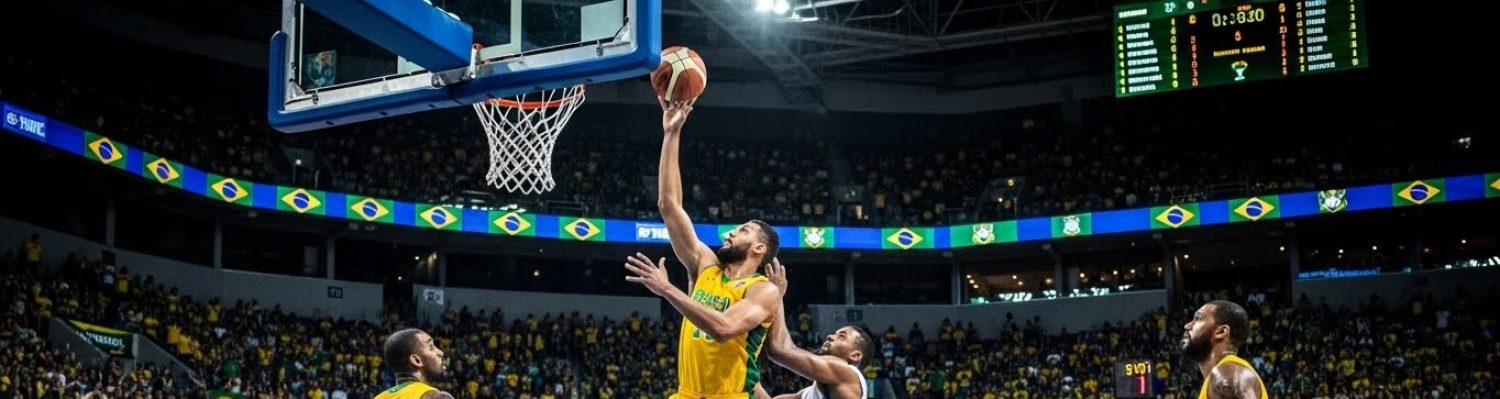

World Basketball Brazil: Analyzing Brazil’s Global Rise
Updated: April 9, 2026
Brook Basketball Brazil is more than a label—it’s a lens on how Brazil’s basketball ecosystem is evolving, from youth academies to the national team, and how fans follow every twist. In a country where football dominates headlines, hoop culture is expanding through city leagues, university programs, and international pathways that pull players into Europe, the Americas, and beyond. This analysis peers at the forces shaping that rise, the risks that could slow it, and the practical steps leagues, clubs, and federations can take to translate momentum into sustainable growth.
Context and Current State
At the professional level, Brazil’s National Basketball League (NBB) remains the most visible domestic platform, existing alongside state leagues, developmental circuits, and a growing array of youth-focused programs. The domestic structure is a mosaic: regional competitions feed into national events, while universities and private academies cultivate talent outside traditional club academies. The national team’s cycles increasingly prize younger players who gain experience abroad and return with refined skill sets that enrich local programs. In parallel, media coverage of basketball in Brazil has expanded, driven by a mix of club success stories, international player movements, and community basketball initiatives that keep courts active even between seasons.
This environment matters for Brazil’s long-term competitive arc. A steady supply of technically proficient players, combined with evolving coaching curricula and data-driven development, can translate into more Brazilian players competing at high levels internationally. The challenge is turning talent into sustained pathways: ensuring youngsters have access to consistent facilities, quality coaching, and opportunities to test themselves against top competition beyond national borders.
Structural Levers and Risks
Key levers for growth include stable funding for grassroots programs, clearer development pipelines, and stronger partnerships with international leagues. Municipal and state governments increasingly fund sport infrastructure, yet funding remains uneven across regions, making equity a persistent concern. Private sponsorship, corporate-backed academies, and sponsorship-driven media deals can unlock resources for coaching education, talent scouting, and facility modernization. In parallel, governance at the federation level must balance sport development with competitive integrity, ensuring coaches and administrators are credentialed and programs are transparent in their progress tracking.
External shocks, such as climate-related disruptions to training sites, remind stakeholders that access to reliable spaces is not a given. Regional events—like major rains that spill into communities and damage venues in places such as Minas Gerais—highlight how fragile training ecosystems can be when not supported by resilient infrastructure and contingency planning. These episodes underscore the need for multi-year capital planning, investment in weather-proof facilities, and community-based spaces that can withstand seasonal extremes while keeping youth programs active.
Emerging Talent Pipeline
The talent pipeline in Brazilian basketball is increasingly global in its orientation. Talent often begins in municipal leagues and school programs, then flows into the NBB and regional circuits before catching the eye of scouts from Europe, Latin America, and North America. Coaches with exposure to international training methods—focusing on ball-handling, decision-making, and physical development—raise the baseline for what Brazilian players can achieve on the court. Returning players who have developed in Europe or the U.S. bring tactical awareness and professional habits that uplift domestic standards. This cycle—local development, international experience, and domestic reinforcement—creates a more coherent pathway from youth leagues to pro basketball within Brazil and beyond its borders.
Crucially, the growth of youth academies in major urban centers, coupled with improved data collection (game analytics, skill tracking, and injury prevention) helps identify early signals of potential, enabling targeted coaching and scholarship opportunities. As scouts increasingly align with Brazilian clubs, the chance to connect promising players with collegiate programs or pro opportunities grows, reinforcing a self-sustaining loop of development and exposure.
Actionable Takeaways
- Direct funding to grassroots programs should be prioritized to expand access to quality coaching and facilities for underserved regions.
- Strengthen cross-border partnerships with European and North American leagues to establish clear pathways for Brazilian talent and exchange coaching practices.
- Invest in coaching education and credentialing to raise the overall standard of development across clubs and academies.
- Prioritize data-driven development, including athletic profiling, injury prevention, and performance analytics to guide player progression.
- Develop resilient training spaces and contingency plans to withstand climate-related disruptions, protecting long-term youth engagement.