Carlos Alcaraz and Cross-Sport Buzz at Indian Wells: Brazil Hoops
Updated: April 9, 2026
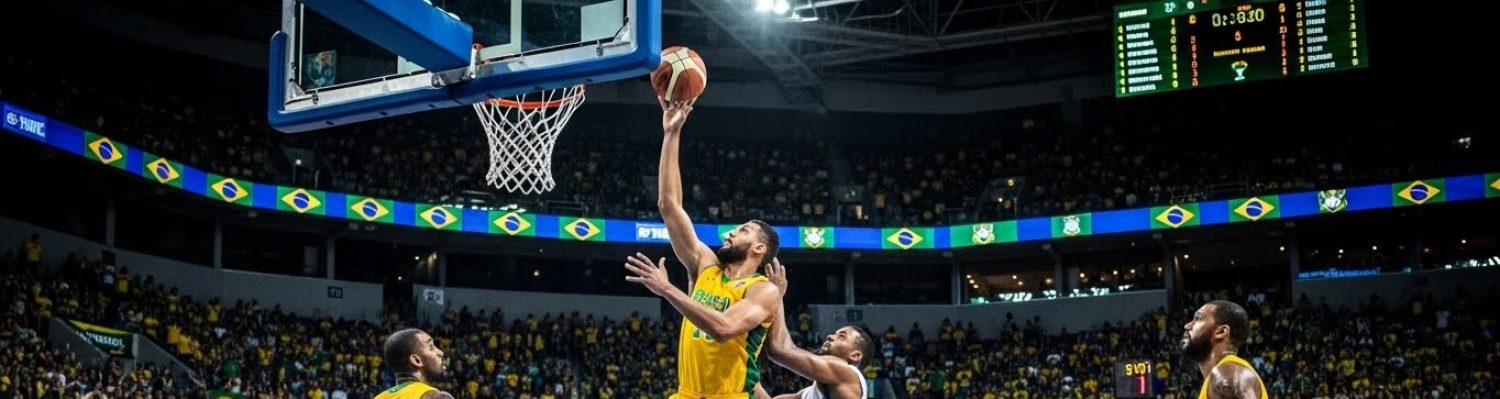
gui Basketball Brazil has a new case study unfolding in the Golden State: Gui Santos’ multi-year contract extension with the Warriors is more than a personal milestone. It crystallizes a broader shift in how Brazil seeks to position its young players on the global stage and how NBA franchises are thinking about talent development beyond draft night. The move matters not only for Santos’ career trajectory but for a Brazilian basketball ecosystem that has long wrestled with inconsistent investment, domestic competition, and a growing but uneven pipeline to the world’s top leagues. By tying a promising player to a long-term NBA franchise contract, the Warriors are, in effect, signaling confidence in Santos’ development while inviting national stakeholders to recalibrate how they measure potential and allocate resources. The question now is how this extension might ripple through Brazil’s clubs, academies, and national programs over the next five years.
Gui Santos extension and Brazil’s talent narrative
Beyond personal achievement, Santos’ extension reframes the expectations for Brazilian players entering professional leagues abroad. The Warriors’ decision to anchor him with a multi-year deal places him alongside a small but growing cohort of Brazilian players who have navigated the NBA’s global scouting network in recent years. In Brazil, grassroots clubs, regional academies, and development programs have produced a rising class of prospects, but translating that potential into sustained representation in the upper echelons of the NBA has remained uneven. Santos’ integration into a modern NBA organization—one with a renowned development system and a global brand—offers a template for how the domestic system might align around a single star’s arc, even as many others remain in the pipeline. The effect in Brazil is likely to be a quiet recalibration: clubs will emphasize long-term development, agents will emphasize projected timelines, and fans will begin to view the NBA path as a plausible, rather than exceptional, route for Brazilian talent.
Economic and development signals behind the deal
From a business lens, the deal signals that NBA teams are willing to invest in the long tail of talent in countries with growing fan bases and strategic markets. For Santos and his entourage, a multi-year extension with the Warriors offers stability that can accelerate on-court development, but it also creates pressure to deliver on-game performance that translates back to Brazil’s domestic audiences. Domestic teams may interpret the extension as validation of earlier scouting and coaching investments, just as advertisers and sponsors watch how Santos’s profile grows in Brazil and among Brazilian expatriates.
International exposure also matters in practical terms. In markets where media rights, streaming, and social platforms connect fans across time zones, Santos’s ascent can elevate the visibility of Brazilian leagues and youth academies. The ripple effects can include more structured scouting partnerships, shared training philosophies, and, crucially, a clearer pathway from local academy to NBA system. None of this guarantees a straight line to NBA stardom for every Brazilian prospect, but it reframes the value proposition for clubs that invest in late-blooming athletes who might need time to mature physically and tactically.
Implications for Brazil’s talent pipeline and the national program
At the federation and club level, Santos’s extension serves as a real-time calibration tool. If Brazilian teams can align development plans with what NBA franchises prize—athleticism, basketball IQ, ball-handling fluency, and a professional approach—then there is a stronger incentive to synchronize under-16, under-18, and development leagues with a clearly defined outcomes ladder. This means more data-driven training, standardized progression metrics, and longer-term contracts at the club level that prepare players for both domestic competition and overseas opportunities. For the national program, the lesson is not to imitate the NBA setup wholesale, but to codify a Brazilian pathway that respects local culture while embracing international best practices in player development.
Critically, investments in scouting networks, coaching education, and facilities will determine whether Santos’s success translates into a wider surge of talent. The Brazilian system has strengths—technical skill, creativity, and a deep basketball culture—but it has struggled with consistency in funding and in coaching quality across regions. A strategic response would be to pair national-circuit exposure with partnerships in North America and Europe, enabling more players to test their mettle in varied systems while Brazil preserves a domestic ladder that feeds the national team.
Actionable Takeaways
- Build formal cross-border development programs pairing Brazilian clubs with NBA and European academies to streamline talent progression.
- Increase funding for youth development and coaching certification through the CBB and state associations to raise coaching standards nationwide.
- Strengthen the domestic league calendar and investment so players gain meaningful exposure without sacrificing development time.
- Establish a transparent national-player progression plan with clear benchmarks to reach the NBA and international markets.
- Elevate domestic pathways in media and sponsorship strategies to make the NBA route more visible and attainable for Brazilian youth.