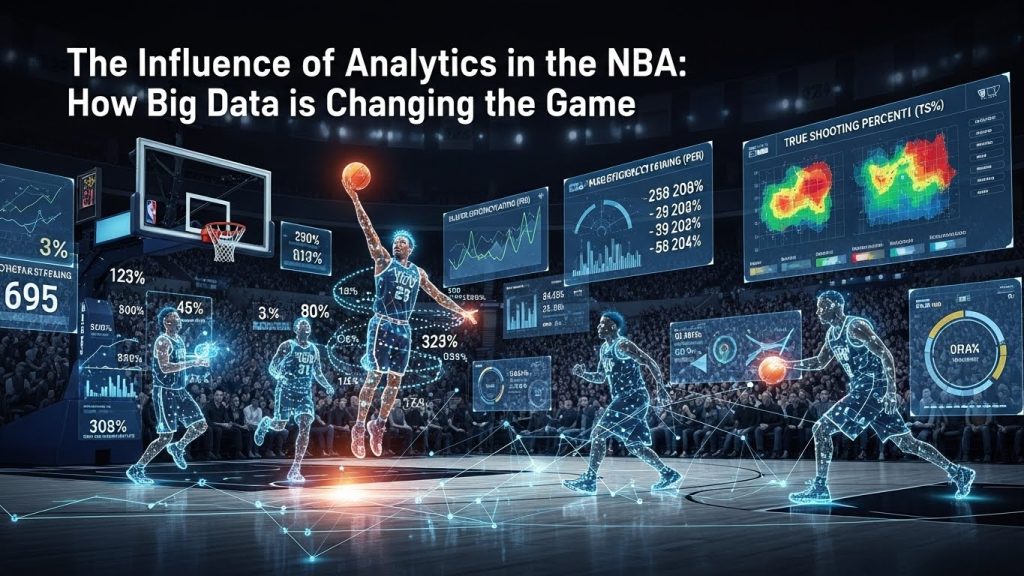
The Influence of Analytics in NBA: How Big Data is Changing the Game
In recent years, the National Basketball Association (NBA) has witnessed a significant transformation in the way teams approach the game. This evolution can largely be attributed to the advent of big data and analytics. From player performance to game strategy, the influence of analytics is reshaping basketball, leading to more informed decision-making and innovative tactics. This article delves into the profound impact of analytics on the NBA, exploring various facets of how big data is revolutionizing the sport.
Understanding the Rise of Big Data in Basketball
The concept of using data to enhance sports performance is not entirely new; however, its application in basketball has reached unprecedented levels. The integration of technology, such as motion sensors and advanced tracking systems, allows teams to gather vast amounts of data. These systems capture every movement on the court, offering insights that were previously unattainable. With the rise of sports technology, teams now have access to detailed statistics that inform every aspect of the game, from player conditioning to in-game tactics.
Player Performance and Development
One of the most significant impacts of analytics in the NBA is on player performance and development. Through data analysis, teams can monitor players’ physical metrics, such as speed, agility, and stamina, allowing for personalized training programs. By analyzing this data, coaches can identify areas for improvement and tailor workouts to enhance specific skills.
For instance, a player’s shooting form can be dissected using data analysis, leading to adjustments that improve accuracy. Additionally, injury prevention has become a focal point, with analytics helping to identify potential risks and manage player workloads accordingly. Teams can ensure players remain at peak performance throughout the season by leveraging analytics to monitor fatigue and recovery times.

Strategic Game Planning
Analytics has revolutionized game planning by providing teams with deeper insights into their opponents’ strategies. By analyzing patterns in gameplay, coaches can devise strategies that exploit weaknesses and neutralize strengths. This data-driven approach enables teams to make real-time adjustments during games, enhancing their competitive edge.
The influence of analytics is evident in the increased emphasis on three-point shooting. Data revealed the efficiency of three-point shots compared to mid-range jumpers, leading to a strategic shift across the league. Teams now prioritize spacing and perimeter shooting, a strategy that has redefined modern basketball.
Scouting and Drafting
Scouting and drafting players is another area where analytics has made a significant impact. Teams use data analytics to evaluate potential draft picks, analyzing a player’s college performance, physical attributes, and even psychological traits. This comprehensive analysis helps teams make informed decisions, reducing the risk associated with high-stakes draft selections.
For example, the use of analytics in scouting was instrumental in identifying undervalued players who later became NBA stars. Teams can uncover hidden gems by utilizing advanced statistics and predictive modeling, giving them a competitive advantage in building their rosters.
Fan Engagement and Experience
Beyond the court, analytics has also enhanced fan engagement and experience. By analyzing fan preferences and behaviors, teams can tailor marketing strategies and enhance in-game experiences. Data-driven insights allow teams to create personalized content, engage with fans on social media, and even predict attendance trends.
Moreover, analytics has improved the viewing experience for fans. Enhanced statistics and visualizations, such as shot charts and player heat maps, provide deeper insights into the game, enriching the fan experience. Through advanced analytics, fans gain a better understanding of the strategies and performances that define each game.
The Future of Analytics in the NBA

The role of analytics in the NBA continues to grow, with teams constantly seeking innovative ways to leverage data. Emerging technologies, such as artificial intelligence and machine learning, are poised to further enhance the capabilities of analytics in basketball. These advancements will lead to even more precise player evaluations, real-time strategic adjustments, and enhanced fan interactions.
As the NBA embraces this data-driven era, the role of traditional scouting and coaching will evolve. The integration of analytics with human expertise will lead to a more comprehensive approach to understanding and playing the game. The future of basketball will be shaped by the synergy between data and intuition, as teams strive to gain a competitive edge.
Takeaways
In conclusion, the influence of analytics in the NBA is profound and far-reaching. From player development to strategic game planning and fan engagement, big data is transforming how basketball is played and experienced. As technology continues to evolve, the integration of analytics in the NBA will only deepen, leading to new innovations and insights. The future of basketball is bright, and analytics will undoubtedly play a pivotal role in shaping the next generation of the game.
Challenges and Considerations
While the integration of analytics in the NBA has brought numerous benefits, it also presents certain challenges. One major concern is the potential overreliance on data, which may overshadow the intuitive aspects of coaching and decision-making. There is a risk that teams could focus too much on numbers, potentially neglecting the nuanced elements of human performance and teamwork that cannot be quantified.
Furthermore, the use of analytics raises ethical considerations regarding player privacy and data security. Teams must ensure that player data is handled responsibly and with consent. The balance between leveraging data for competitive advantage and respecting individual privacy is crucial as the NBA navigates this new landscape.
Integrating Human Expertise with Data

To maximize the benefits of analytics, NBA teams are finding ways to integrate human expertise with data-driven insights. Coaches and analysts collaborate to interpret data, combining their knowledge and experience with analytical findings to make informed decisions. This collaborative approach ensures that analytics enhances rather than replaces the human element of basketball.
For instance, while data can suggest optimal lineups or strategies, the coach’s ability to motivate players, adapt to unexpected situations, and manage team dynamics remains irreplaceable. The best outcomes are achieved when data and human intuition work in harmony, creating a holistic approach to the sport.
Case Studies: Teams Leading the Way in Analytics
Several NBA teams have emerged as pioneers in the use of analytics, setting benchmarks for the rest of the league. The Golden State Warriors, for instance, have been at the forefront of integrating analytics into their game strategy. By emphasizing three-point shooting and player movement, they have revolutionized the way basketball is played.
Another notable example is the Houston Rockets, who have utilized analytics to focus on shot selection and efficiency. Their strategy of prioritizing three-point shots and layups over mid-range jumpers has been informed by data analysis, influencing many teams across the league.
These case studies highlight how teams that effectively apply analytics can achieve remarkable success, setting trends that shape the future of the NBA.
International Influence and Global Expansion
The impact of analytics is not confined to the NBA; it is also influencing international basketball. As the NBA expands its global reach, international teams and leagues are adopting similar data-driven approaches. This cross-pollination of ideas is enhancing the quality of basketball worldwide, as teams learn from the NBA’s analytical successes and apply these lessons in their own contexts.
The globalization of analytics in basketball is fostering a more competitive and exciting international scene, with players and teams around the world benefiting from advanced data insights.
Conclusion: A New Era of Basketball

The NBA is unequivocally entering a new era where analytics play a central role in shaping the game. As technology continues to advance, the potential for data-driven innovation is limitless. Teams that effectively harness the power of analytics will gain a competitive edge, pushing the boundaries of what is possible in basketball.
Ultimately, the integration of big data in the NBA is not just about numbers; it’s about enhancing the beauty and complexity of the game. By combining analytics with human creativity and intuition, the NBA is poised to reach new heights, ensuring that the sport remains dynamic and captivating for players and fans alike.
The Role of Technology in Advancing Analytics
Technology plays a crucial role in the advancement of analytics within the NBA. Innovations such as high-definition cameras, wearable technology, and real-time data processing have greatly enhanced the ability to collect and analyze data. These technologies provide detailed insights into player movements, biomechanics, and on-court actions, enabling teams to develop more sophisticated analytical models.
Wearable devices, for example, track vital metrics such as heart rate, distance covered, and exertion levels, offering a comprehensive view of a player’s physical condition. This data is invaluable for tailoring training programs, managing player loads, and preventing injuries. The integration of technology and analytics is thus essential for maintaining player health and optimizing performance.
Training the Next Generation of Analysts
As analytics become increasingly integral to the NBA, the demand for skilled analysts is growing. Teams are seeking professionals who not only understand data but can also translate complex statistical information into actionable insights. Universities and educational institutions are responding by offering specialized programs in sports analytics, preparing the next generation of analysts to meet the evolving needs of the sport.
These programs combine coursework in statistics, computer science, and sports management, equipping students with the technical skills and sports knowledge necessary to excel in the field. As a result, the talent pool for NBA analytics is expanding, ensuring that teams have access to the expertise required to remain competitive.
The Cultural Shift Towards Data-Driven Decision Making
The influence of analytics in the NBA extends beyond the court, driving a cultural shift towards data-driven decision-making throughout the organization. From front-office executives to coaching staff, a data-centric mindset is becoming ingrained in the decision-making process. This shift is fostering a culture of continuous improvement, where decisions are informed by evidence and objective analysis.
The adoption of analytics is also influencing the way teams approach business operations, including marketing, ticket sales, and fan engagement. By leveraging data insights, teams can optimize their operations, enhance fan experiences, and increase revenue streams, demonstrating the broad impact of analytics across the organization.
Challenges in Data Interpretation
While the potential of analytics is vast, interpreting data accurately remains a challenge. The sheer volume of data generated can be overwhelming, and extracting meaningful insights requires a sophisticated understanding of statistical methods and basketball. Analysts must be adept at distinguishing between correlation and causation, ensuring that conclusions drawn from data are valid and applicable.
Additionally, the subjective nature of basketball means that not all aspects of the game can be quantified. Intangibles such as leadership, teamwork, and mental toughness play a critical role in a team’s success but are difficult to measure through data alone. Analysts must therefore integrate qualitative observations with quantitative data to provide a comprehensive analysis.
Conclusion: The Future of Basketball Analytics
As the NBA continues to embrace analytics, the future of basketball looks promising. The integration of advanced data analysis with traditional coaching techniques is creating a more dynamic and exciting game for players and fans alike. The ongoing development of new technologies and analytical methods will further enhance the ability to understand and improve performance, ensuring that the NBA remains at the forefront of sports innovation.
Ultimately, the influence of analytics in the NBA is a testament to the evolving nature of the sport. By harnessing the power of data, the league is not only transforming the way basketball is played but also enriching the experience for everyone involved. As teams continue to push the boundaries of what is possible, the future of basketball is bright, driven by the endless possibilities that analytics present.
About the Author